%20(3).png?width=1555&height=462&name=Novarad%20EHS%20Logo%20Full%20Color%20(1)%20(3).png "Novarad Enterprise Healthcare Solutions")
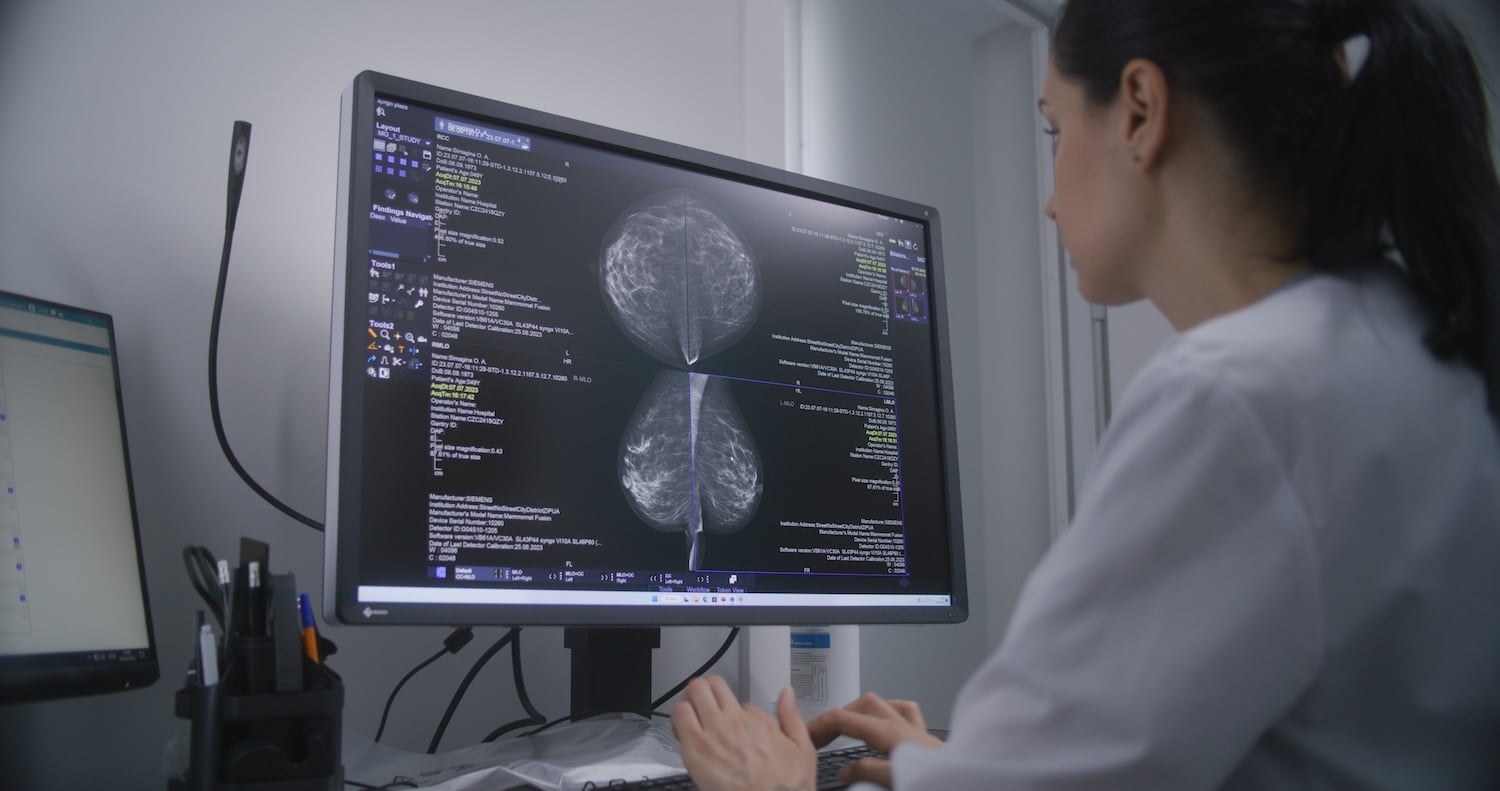
Reducing mammography recall rates is a priority for breast imaging centers. When a screening patient gets a callback, the clock starts on several days of avoidable anxiety, a second appointment your schedule has to absorb, and added cost to the program and the payer — and most of the time, there was no cancer to find. Recall rate is one of the few breast imaging metrics that touches patient experience, program economics, and reading quality at once. It's also one of the most misread. A high recall rate is often blamed on individual radiologist judgment, when in practice much of it is driven by the imaging environment those radiologists work in: whether priors are available at read time, whether image quality is consistent, and whether the reading workflow lets them make a confident call the first time.
This piece is written for the people who own that environment — breast imaging directors, department administrators, and the IT leaders who support them.
What is a mammography recall rate?
The recall rate is the percentage of screening mammography patients who are called back for additional imaging after an initial screening exam. It is calculated as the number of screening exams assigned BI-RADS category 0 ("incomplete — needs additional imaging") divided by total screening exams over a period.
The American College of Radiology and Breast Cancer Surveillance Consortium (BCSC) benchmarks place the acceptable range at roughly 5% to 12%, with U.S. National Mammography Database data suggesting a 10% recall rate is the practical norm. BCSC data put the median radiologist around 9.8%, with the middle 50% falling between about 6.4% and 13.3% (BCSC performance benchmarks; P4QM measure). Knowing where your program sits inside that range — and where individual readers sit — is the starting point for any improvement effort.
Why do high recall rates hurt patients and programs?
 High recall rates impose cost without a matching gain in cancer detection. Evidence shows little to no increase in cancer detection once recall rates climb above 12%, but a clear rise in false-positive exams.
For the patient, a callback means days of stress and often a diagnostic workup that turns out negative. For the program, every unnecessary recall consumes diagnostic slots, technologist and radiologist time, and follow-up coordination — capacity you could have spent on screening throughput or genuinely indeterminate cases. Over a year, a recall rate sitting two or three points above benchmark translates into hundreds of avoidable diagnostic visits at a mid-volume center. There is a reputational dimension as well: patients who experience repeated false alarms are measurably less likely to return for routine screening, which undercuts the early-detection mission the program exists to serve.
What causes unnecessary recalls?
Most preventable recalls trace back to technical and workflow factors, not reader skill. The recurring drivers are missing prior studies at read time, inconsistent image quality, positioning and technique errors, and an unsettled reading environment.
The single most common avoidable cause is the absence of comparison priors. Without last year's images side by side, a stable benign finding looks new, and the safe call is a callback. Positioning and compression errors — inadequate pectoral muscle on the MLO, motion blur, skin folds obscuring tissue — force repeat imaging that should have been caught at acquisition. Inconsistent hanging protocols and variable monitor or ambient-light conditions make subtle findings harder to dismiss confidently. And reader factors compound these: studies of digital breast tomosynthesis and 2D mammography found recall and false-positive rates rise later in the reading day and with interruptions (Radiology, time-of-day analysis). None of these are solved by telling radiologists to recall less; they're solved upstream.
How does imaging workflow affect recall rates?
Workflow determines how much information a radiologist has, and how reliably, at the moment of the read — which directly shapes how often they need a second look. The highest-leverage levers are immediate access to priors, consistent hanging protocols, full-fidelity image display, and protected reading conditions.
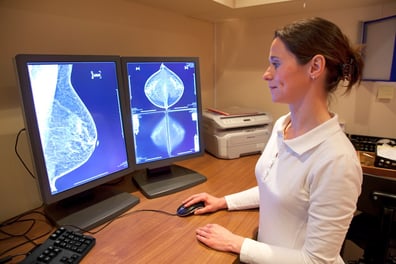 Priors-at-read-time is the clearest example. When prior mammograms — including outside studies — are retrieved automatically and hung in comparison the instant a case opens, readers resolve stable findings on the spot instead of recalling to be safe. Consistent, automated hanging protocols remove the cognitive tax of arranging each case and standardize how findings are reviewed across readers. Displaying tomosynthesis and full-resolution 2D images without downsampling preserves the detail that distinguishes a real lesion from overlapping tissue. Tomosynthesis support matters on its own terms here: pooled data show DBT reduces recall rates by roughly 15–40% relative to 2D while detecting more cancers — in one program 8% of DBT-screened women were recalled versus 10.4% for 2D (JNCI meta-analysis; Diagnostic Imaging). But DBT only delivers that benefit if your workflow can move and display those large datasets without lag.
What are practical steps to lower your recall rate?
Recall reduction is an operational program, not a single fix. The steps that move the metric most reliably are:
- Guarantee priors are available at read time. Audit how often readers open a case without comparison priors hung automatically, including outside studies, and close that gap first — it's usually the largest single source of avoidable recalls.
- Standardize hanging protocols and reading conditions. Lock consistent layouts, calibrated diagnostic monitors, and controlled ambient light so findings are evaluated the same way every time.
- Support tomosynthesis end to end. Ensure acquisition, transfer, and display handle DBT datasets at full fidelity without slowing the reader.
- Monitor recall rate by individual reader. Track each radiologist against benchmark and review outliers with audit data, not impressions — measurement alone often pulls high recallers toward the median.
- Invest in technologist positioning and QC. Most repeat-for-technique recalls are preventable at the modality with training and immediate image-quality checks.
Treat these as a quarterly cycle with a named owner and a tracked recall-rate target, not a one-time intervention.
How does the right PACS support a lower recall rate?
A mammography-purpose-built PACS lowers recalls by removing the workflow friction behind them: it makes priors automatic, display consistent, and tomosynthesis fast. The reading environment stops being a variable.
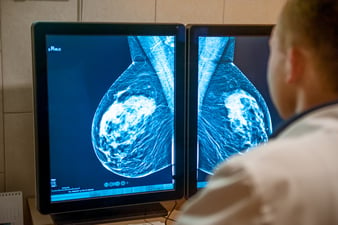 This is where infrastructure does quiet but decisive work. MammoIQ, Novarad's mammography PACS, is built to retrieve and hang relevant priors automatically — including studies from outside facilities through standard HL7 and DICOM interfaces — so comparisons are in front of the reader the moment a case opens. It applies consistent, automated hanging protocols and displays full-resolution 2D and 3D tomosynthesis without downsampling, preserving the detail that lets a radiologist confidently dismiss a benign finding rather than recall it. Because it's designed to fit the systems and modalities you already run rather than require a rip-and-replace, it's a realistic upgrade path for rural, critical-access, and mid-size breast imaging programs that need benchmark performance without enterprise-scale budgets. The clinical payoff is straightforward: fewer patients carrying home a callback that didn't need to happen.
See it on your own workflow
If your recall rate sits above the 5–12% benchmark — or you simply don't have clean reader-level data to know — the fastest way to find the workflow gap is to see a purpose-built mammography read in action. Request a demo of MammoIQ to see how automatic priors, consistent protocols, and full-fidelity tomosynthesis display help your team lower callbacks while keeping cancer detection where it belongs.