%20(3).png?width=1555&height=462&name=Novarad%20EHS%20Logo%20Full%20Color%20(1)%20(3).png "Novarad Enterprise Healthcare Solutions")
Best Cardiology Imaging Platforms With EMR Integration
Oct 2, 2026
Read Time: 10 min
by Novarad
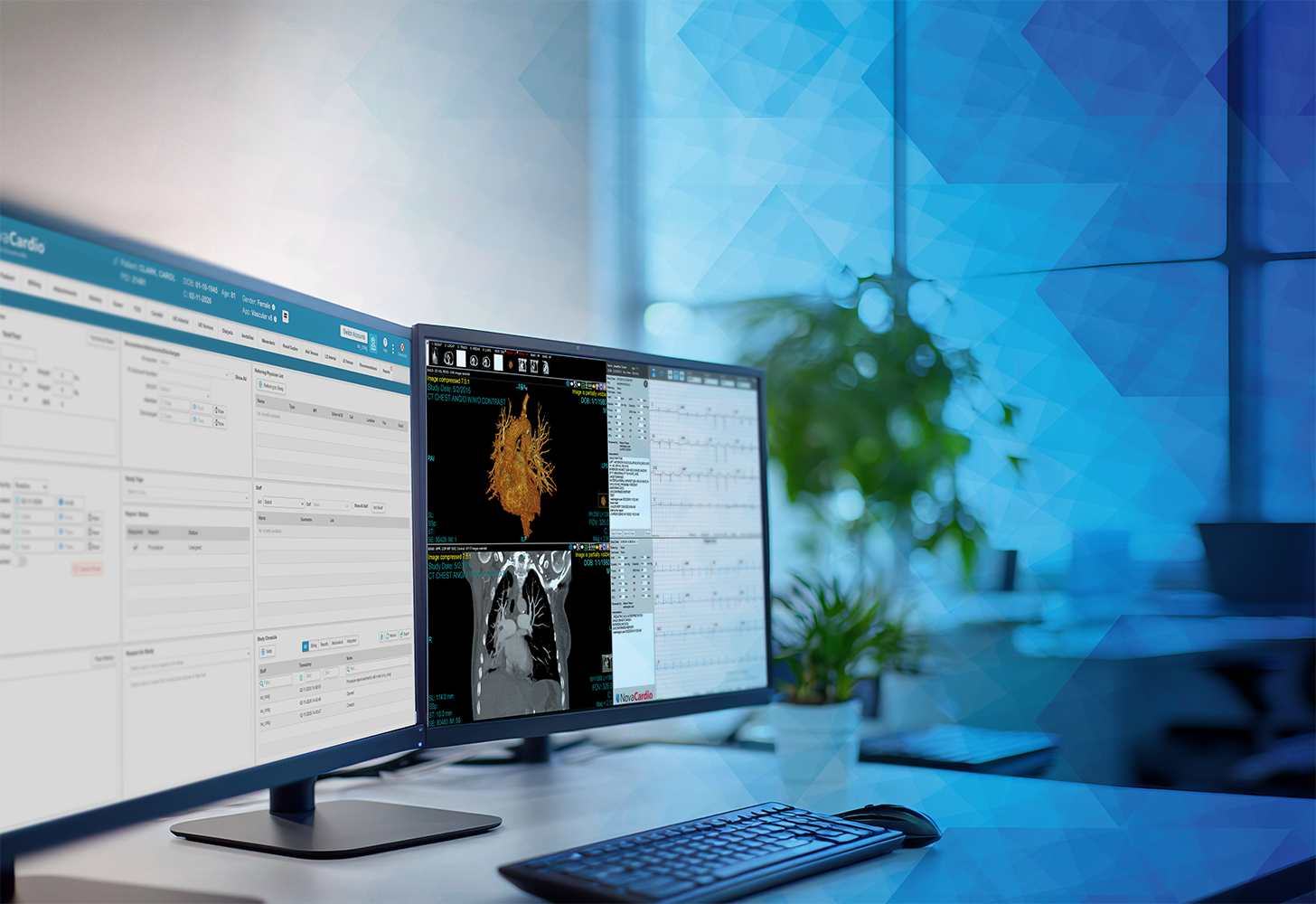
Most hospitals approach cardiac imaging software selection as a procurement exercise: compare feature checklists, negotiate a price, and move on. For rural hospitals operating with lean IT teams, that approach often leads to an imaging platform that works in isolation from the rest of the clinical environment. The result is a cardiology department that generates data the EMR cannot reach, reports that require manual re-entry, and workflows that pull clinical staff away from patient care.
Novarad built NovaCardio to close that gap, giving rural and resource-constrained hospitals a cardiology imaging platform with full EMR interoperability, vendor-neutral viewing, and build-as-you-grow scalability. This guide compares six cardiology imaging platforms through the lens of EMR integration, IT manageability, and workflow fit for hospitals that need reliable imaging access without a dedicated imaging IT team.
Quick guide: 6 best cardiology imaging platforms for rural hospitals
- NovaCardio: The best all-in-one cardiac imaging platform for EMR-integrated cardiology workflows
- Philips Cardiovascular Workspace: Cloud-hosted cardiovascular information management with SaaS deployment
- Sectra Enterprise Imaging for Cardiology: Vendor-neutral single-application review across echo, cath, and nuclear modalities
- ScImage PicomEnterprise: Scalable cloud CVIS with automated data mapping for multi-discipline labs
- Fujifilm Synapse Cardiology PACS: Server-side architecture with zero-download viewing and automated structured reporting
- Intelerad InteleHeart: Unified CVIS and registry platform with cloud-based data sharing
How we chose the best cardiology imaging platforms for rural hospitals
Rural hospitals face a distinct set of pressures when selecting cardiology imaging technology. Your IT staff may be responsible for every clinical system in the building, and your cardiologists may split time across multiple facilities. The platforms on this list were selected because they address those realities directly.
Here is what we evaluated:
- EMR/EHR interoperability: Does the platform connect directly to your electronic health records using HL7 and DICOM, so measurements and reports flow automatically without manual re-entry?
- IT footprint and maintenance: Can your team deploy and maintain the platform without dedicated imaging IT staff? We looked at web-based deployment, automatic updates, and minimal on-site hardware requirements.
- Multi-modality support: Does the platform handle echo, cardiac MRI, cardiac CT, vascular, nuclear cardiology, and cath lab studies from a single viewer?
- Structured reporting: Does it include built-in reporting tools that auto-populate measurements and comply with accreditation standards?
- Scalability: Can the platform grow with your facility, from a single cardiology lab to a multi-site network, without disruptive upgrades or re-implementations?
- Vendor-neutral viewing: Does the platform support images from third-party modalities, or does it lock you into a single equipment vendor?
The 6 best cardiology imaging platforms for rural hospitals
1. NovaCardio: Best overall cardiology imaging platform for rural hospitals with EMR integration
NovaCardio is Novarad's dedicated cardiac imaging solution, built from the ground up to unify cardiology workflows in a single application. Where many platforms treat EMR integration as an add-on, NovaCardio treats it as a structural requirement. HL7 and DICOM compliance are built into every data path, which means patient demographics, orders, and completed reports move between your cardiology viewer and your EMR automatically.
For rural hospitals, the operational impact is immediate. Your cardiologists can view radiology and cardiology studies from the same viewer, launch structured reporting directly from the diagnostic image viewer, and have signed reports return to the EMR without additional steps. NovaCardio supports echo, stress echo, cardiac MRI, cardiac CT, vascular, nuclear cardiology, and cath lab modalities in a single platform.
Because NovaCardio operates as a standalone solution or as an add-on module to NovaPACS Enterprise Imaging, your facility can start with cardiology and expand into enterprise imaging as needs and budgets allow. Novarad's evergreen software philosophy means all upgrades are included, eliminating the disruptive upgrade cycles that stretch lean IT teams.
NovaCardio features
- Single-click workflows with auto-displayed priors: Prior studies appear automatically when a case opens. This removes the manual step of searching for comparison studies, allowing cardiologists to begin interpreting immediately.
- EncaptureMD structured reporting: Cardiologists launch EncaptureMD directly from the diagnostic viewer. Measurements auto-populate into reports, reducing transcription errors and speeding report turnaround.
- Universal image viewer for radiology and cardiology: Your team reads radiology and cardiology studies from one viewer, which eliminates the need to switch between separate applications during a patient workup.
- Vendor-neutral, multi-modality viewing: NovaCardio supports DICOM-compliant images from any modality vendor. You are not locked into a single equipment manufacturer for echo machines, CT scanners, or MRI units.
- 4D motion and time-domain imaging: Cardiac studies, including congenital heart disease, aortic aneurysm, aortic stenosis, and cardiac valvular disease, are displayed with full 4D motion playback for detailed analysis.
- Build-as-you-grow deployment: Start with the modules you need today and add capabilities over time. This modular approach lets rural hospitals adopt advanced cardiology imaging incrementally.
NovaCardio pros and cons
Pros:
- Full HL7 and DICOM EMR integration with auto-populated structured reports and single-login access
- Radiology and cardiology viewing in one application, reducing training time and IT overhead
- Evergreen software with US-based 24/7 support, so your team never faces an unexpected upgrade project
Cons:
- Facilities with heavily customized third-party reporting tools may need to adjust workflows during initial EncaptureMD setup
- The full feature set is most effective when paired with NovaPACS EI, which may add planning steps for hospitals using a different radiology PACS
- Organizations focused exclusively on a single modality, such as cath lab only, may not need the full multi-modality scope
2. Philips Cardiovascular Workspace: Cloud-hosted cardiovascular information management
Philips Cardiovascular Workspace (IntelliSpace Cardiovascular) is a cardiovascular imaging and information management platform with cloud-hosted availability. In late 2025, Philips received FDA 510(k) clearance for a release that includes SaaS deployment through Philips HealthSuite, giving IT teams the option of hosting cardiac imaging data in the cloud rather than on local servers.
The platform supports multi-modality cardiology data, and its integration with EMR and HIS systems uses IHE profiles for structured data exchange. Philips positions the cloud deployment as a path toward AI-enabled tools and workflow analytics across the cardiovascular care continuum.
Philips Cardiovascular Workspace features
- Cloud-hosted SaaS deployment: Hospitals can host cardiac imaging data off-site, which reduces on-premise server requirements.
- IHE-profile-based EMR integration: Supports structured data exchange with EMR systems through published IHE integration profiles.
- Multi-department data synchronization: Synchronizes cardiovascular data with the vendor-neutral archive (VNA) across departments.
Philips Cardiovascular Workspace pros and cons
Pros:
- Cloud-hosted deployment option reduces on-site IT infrastructure for cardiac imaging data
- Supports IHE integration profiles for structured EMR data exchange
- Designed to accommodate AI-enabled analysis tools as they become available
Cons:
- Cloud deployment requires hospitals to meet Philips-specified network performance and VPN requirements
- The platform is part of a broader Philips ecosystem, so hospitals not using other Philips products may face additional integration planning
- AI-enabled features referenced in the platform roadmap are not all available at this time
3. Sectra Enterprise Imaging for Cardiology: Vendor-neutral single-application review
Sectra offers a cardiology imaging solution that consolidates cardiovascular procedures from multiple modalities into a single diagnostic application. The platform is built around Sectra's VNA and supports echo, cardiac catheterization, nuclear medicine, cardiac MR, cardiac CT, and ECG management. Sectra's web-based viewer, IDS7, allows cardiologists to access studies from any location with a browser.
Integration with EMR systems, including Epic Cupid, uses DICOM, HL7, and web interfaces. According to a Diagnostic Imaging and Cardiology (DIAC) report, interoperability remains the primary concern for hospitals evaluating cardiac PACS platforms, and Sectra's vendor-neutral architecture addresses that concern across its supported modalities.
Sectra Enterprise Imaging for Cardiology features
- Single diagnostic application: Cardiologists review echo, cath, nuclear, and CT studies from one interface without switching applications.
- Automated measurement quantification: Clinical measurements are automatically imported into worksheets and reports, reducing manual data entry.
- Web-based access: Studies load through a browser-based viewer, which removes the need for local software installations.
Sectra Enterprise Imaging for Cardiology pros and cons
Pros:
- Vendor-neutral architecture that integrates with images from most modality manufacturers
- Web-based viewer allows remote access without local software installation
- Supports integration with Epic Cupid and other EMR systems through HL7 and DICOM
Cons:
- The platform is designed for high-production environments, and deployment at smaller facilities may require configuration adjustments
- ECG management capabilities are newer additions and may have a smaller installed base than the core imaging modules
- Hospitals not already using Sectra for radiology will need to plan a separate integration rather than extending an existing Sectra deployment
4. ScImage PicomEnterprise: Scalable cloud CVIS with automated data mapping
ScImage offers PicomEnterprise, a cloud-based CVIS that covers cardiology workflows across echo, vascular, invasive procedures, ECG, stress testing, nuclear cardiology, cardiac CT, and cardiac MRI. The platform features zero-footprint viewing, meaning cardiologists can access studies from any device with a browser and internet connection. ScImage has over 30 years of experience in cardiology imaging.
PicomEnterprise includes automated data mapping for all disciplines and supports EHR integration of orders and results, including viewing and reporting directly in the EHR. The platform also includes embedded AI tools and supports integration with third-party AI solutions.
ScImage PicomEnterprise features
- Zero-footprint viewing: Access cardiac studies from any device through a browser, with no software downloads required.
- Automated data mapping: Patient data maps automatically across all cardiology disciplines, reducing manual entry and data mismatches.
- Embedded AI tools: Built-in AI supports workflow automation and structured reporting, with the option to integrate third-party AI solutions.
ScImage PicomEnterprise pros and cons
Pros:
- Zero-footprint browser-based viewing removes the need for local software installations on clinical devices
- Supports a wide range of cardiology disciplines from a single platform
- Includes EHR integration for orders, results, and reports directly in the EMR workflow
Cons:
- Cloud-dependent architecture requires reliable, high-bandwidth internet connectivity at all clinical sites
- The breadth of supported disciplines may introduce configuration complexity for single-specialty cardiology labs
- Customization of structured reporting templates requires administrative effort during initial deployment
5. Fujifilm Synapse Cardiology PACS: Server-side architecture with automated reporting
Fujifilm's Synapse Cardiology PACS is a cloud-ready, AI-enabled platform designed to bring the entire patient imaging record to cardiologists. The platform's server-side architecture safeguards data centrally rather than on local devices. In 2025, Hackensack Meridian Health, New Jersey's largest health network, expanded its Fujifilm contract to implement Synapse Cardiology PACS across its 18-hospital enterprise system.
Synapse Cardiology PACS features a zero-download viewer and automated clinical reporting that populates measurements and procedural documentation into structured reports. The platform supports interoperability with third-party software and is positioned as part of Fujifilm's broader enterprise imaging ecosystem, alongside Synapse Radiology PACS and Synapse VNA.
Fujifilm Synapse Cardiology PACS features
- Zero-download viewer: Cardiologists view studies through a server-rendered viewer that does not require local software installation.
- Automated structured reporting: Measurements and procedural data auto-populate into clinical reports, reducing documentation time.
- Server-side data security: Patient data is processed and stored on the server, not on local devices, reducing endpoint risk.
Fujifilm Synapse Cardiology PACS pros and cons
Pros:
- Server-side architecture centralizes data security and reduces the attack surface on local devices
- Part of a broader Fujifilm imaging ecosystem that includes radiology PACS, VNA, and AI tools
- Automated structured reporting reduces documentation burden for cardiologists
Cons:
- Hospitals not already using Fujifilm Synapse for radiology may need to plan a separate integration path
- The KLAS Cardiology 2025 report noted that some Fujifilm cardiology customers are transitioning to a newer version that unites radiology and cardiology, which introduces a migration step
- Full AI-enabled features depend on the broader Synapse AI Platform, which may require additional configuration
6. Intelerad InteleHeart: Unified CVIS and registry platform
Intelerad's InteleHeart is a unified cardiology platform that integrates CVIS, registry workflows, analytics, and clinical workflow orchestration. The platform consolidates patient data from imaging, reports, and clinical records into a single interface, giving cardiologists complete patient visibility without switching applications. InteleHeart is cloud-enabled and vendor-neutral.
The platform supports real-time collaboration, allowing geographically separated clinicians to interact while navigating studies. InteleHeart includes EMR integration for orders and results, and its registry capabilities help hospitals track outcomes and meet quality reporting requirements.
Intelerad InteleHeart features
- Unified CVIS and registry: Combines imaging, reporting, and registry data in one platform, reducing the number of separate systems your team needs to manage.
- Real-time collaboration: Clinicians at different locations can review and annotate studies simultaneously through a shared viewer.
- Cloud-enabled, vendor-neutral access: Access diagnostic-quality images and reports from any location without being tied to a specific hardware vendor.
Intelerad InteleHeart pros and cons
Pros:
- Integrated registry and analytics capabilities support quality reporting and outcome tracking
- Real-time collaboration tools allow cardiologists to consult remotely with colleagues
- Cloud-enabled platform reduces on-site infrastructure needs
Cons:
- The breadth of registry and analytics features may require dedicated administrative resources to configure and maintain
- InteleHeart is part of Intelerad's broader product suite, so hospitals may need to evaluate compatibility with their existing radiology PACS
- Smaller single-site hospitals may not require the full registry and collaboration feature set
Comparison table: The best cardiology imaging platforms for rural hospitals
| Platform | Standalone cardiology module | Built-in structured reporting | Evergreen upgrades included |
|---|---|---|---|
| NovaCardio | ✓ | ✓ | ✓ |
| Philips Cardiovascular Workspace | ✗ | ✓ | ✗ |
| Sectra Enterprise Imaging | ✗ | ✓ | ✗ |
| ScImage PicomEnterprise | ✓ | ✓ | ✗ |
| Fujifilm Synapse Cardiology | ✗ | ✓ | ✗ |
| Intelerad InteleHeart | ✓ | ✓ | ✗ |
How does EMR integration affect cardiology workflow in rural hospitals?
EMR integration determines how much manual work your cardiology staff performs between an image capture and a completed report. When your cardiac imaging platform connects directly to the EMR through HL7 and DICOM, patient demographics pre-populate, orders route automatically, and signed reports return to the patient chart without re-entry.
For rural hospitals where cardiologists may read remotely, the integration path is even more important. A cardiologist interpreting studies from a home office needs the same data access as one sitting in the hospital. Novarad builds this capability into NovaCardio through web-deployed viewing and HL7 integration that keeps remote reads connected to the EMR in real time.
According to a policy brief by the National Rural Health Association, rural health systems face particular challenges with EMR interoperability because they often operate on smaller EMR platforms with fewer integration resources (NRHA Policy Brief on EMR Interoperability). A cardiology imaging platform that arrives with pre-built HL7 and DICOM interfaces reduces that burden significantly.
What should you look for in a cardiology PACS for a hospital with limited IT staff?
The first question is deployment model. A web-based, cloud-ready platform reduces the on-site hardware your team needs to install, monitor, and maintain. If the platform can run from a browser, your cardiologists can access it from any connected device without local software installs or updates.
The second question is upgrade management. Platforms that include all upgrades as part of the subscription, like Novarad's evergreen software model, prevent the disruptive migration projects that pull lean IT teams away from their other responsibilities for weeks at a time.
The third question is support availability. A hospital running a 24/7 imaging operation needs a vendor with 24/7 US-based support. Novarad includes this with every deployment, giving your team direct access to support engineers who understand your configuration.
Why NovaCardio is the best cardiology imaging platform for rural hospitals
The gap between a cardiology imaging platform that works in isolation and one that works with your EMR, your IT team, and your clinical workflow is where operational efficiency lives. NovaCardio closes that gap by treating EMR interoperability as a foundational design requirement, not a feature to be added later.
Novarad gives your cardiology team a single viewer for radiology and cardiac studies, structured reporting that auto-populates from the diagnostic viewer, and build-as-you-grow scalability that matches the pace of rural hospital growth. Every upgrade is included. US-based 24/7 support is standard. Your IT team does not need to plan for periodic migration projects or negotiate separate upgrade contracts.
For hospital administrators and radiology leaders evaluating their next cardiology imaging investment, the question is not which platform has the longest feature list. The question is which platform fits the way your hospital operates today, and still fits as your cardiology volume grows. Request a demo of NovaCardio to see how it integrates with your EMR and supports your cardiology workflows from a single application.
FAQs about cardiology imaging platforms with EMR integration
What is a cardiology PACS?
A cardiology PACS is a picture archiving and communication system designed specifically for cardiac imaging. It stores, retrieves, and displays cardiovascular images from modalities such as echo, cardiac CT, cardiac MRI, nuclear cardiology, and cath lab procedures.
NovaCardio is Novarad's cardiology PACS, supporting all major cardiac modalities from a single diagnostic viewer with built-in structured reporting.
Why does EMR integration matter for cardiac imaging?
EMR integration eliminates manual data re-entry between your imaging platform and your electronic health record. When measurements, reports, and patient demographics flow automatically, your staff spends less time on documentation and more time on clinical work.
NovaCardio connects to your EMR through HL7 and DICOM interfaces, routing completed reports directly to the patient chart.
Can rural hospitals use cloud-based cardiology imaging platforms?
Yes, if your facility has reliable internet connectivity. Cloud-based platforms reduce on-site hardware requirements and allow remote access to studies. NovaCardio supports web-deployed viewing and can be configured for cloud, on-premises, or hybrid deployment depending on your hospital's infrastructure.
What is structured reporting in cardiology?
Structured reporting uses standardized templates to capture clinical measurements, findings, and procedural data in a consistent format. This approach reduces transcription errors and supports accreditation compliance.
Novarad's EncaptureMD reporting platform integrates directly with NovaCardio, auto-populating measurements into structured reports from the diagnostic viewer.
How do you evaluate cardiology imaging platforms for interoperability?
Start by confirming HL7 and DICOM compliance. Check that the platform supports bi-directional data exchange with your specific EMR system, including order routing, demographic pre-population, and report delivery. Novarad builds interoperability into NovaCardio at the architecture level, supporting integration with any HL7 and DICOM-compliant EMR.